

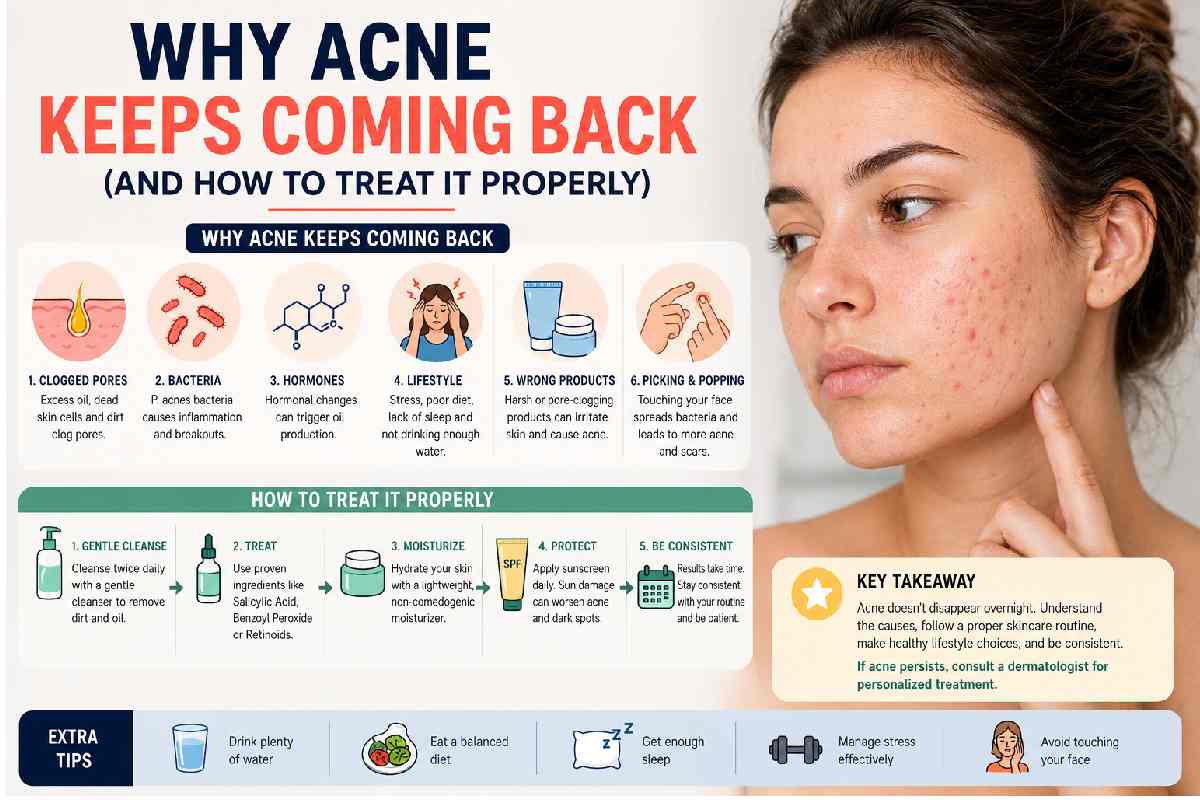
Why Acne Keeps Coming Back (And How to Treat It Properly)
Meet the people behind this publication


Why Acne Keeps Coming Back (And How to Treat It Properly) – Understanding recurring acne, hidden triggers, and why professional treatment matters
For many people, acne is not just a temporary teenage concern. It can become a frustrating cycle of breakouts that improve briefly, then suddenly return again — sometimes worse than before.
One of the biggest misconceptions about acne is believing that if a product temporarily clears the skin, the underlying issue has been solved. In reality, recurring acne is often more complex and influenced by multiple internal and external factors that require a more personalized and consistent approach.
This article belongs in Acne & Anti-AgeingAcne Is More Than Just Surface-Level Breakouts
Acne develops through a combination of oil production, inflammation, clogged pores, bacteria, hormones, and skin barrier imbalance. While over-the-counter products may reduce visible breakouts temporarily, they often fail to address the underlying triggers contributing to recurring flare-ups.
In many cases, acne can be influenced by:
- Hormonal fluctuations
- Stress and inflammation
- Excess oil production
- Skin barrier damage
- Inconsistent skincare routines
- Incorrect product use
Environmental and lifestyle factors
This is why some individuals feel like they are “constantly starting over” with their skin.
Common Mistakes That Can Make Acne Worse
Many people unintentionally worsen acne by aggressively trying to treat it on their own. Social media trends, constantly switching products, and overusing active ingredients can leave the skin irritated and inflamed.
Some of the most common mistakes include:
- Over-exfoliating the skin
- Using harsh scrubs or drying products
- Layering too many active ingredients
- Frequently changing skincare routines
- Picking or squeezing breakouts
Stopping treatment too early once the skin improves
When the skin barrier becomes compromised, inflammation often increases — leading to more breakouts, redness, and longer recovery times.
For help with marks left after breakouts, see how to get rid of acne scars.
Recurring Acne Often Leads to Scarring and Pigmentation
Persistent acne does not only affect active breakouts. Repeated inflammation can also contribute to:
- Post-inflammatory hyperpigmentation (dark marks)
- Acne scarring
- Uneven skin texture
- Long-term redness and sensitivity
For individuals with deeper or recurring acne, early intervention can play an important role in reducing the risk of long-term skin changes.
This is especially important because acne-related pigmentation and scarring can remain visible long after breakouts have healed.
Why Professional Acne Treatment Is Different
Professional acne care is not simply about applying stronger products. A structured treatment approach focuses on understanding the skin as a whole and identifying the factors contributing to ongoing breakouts.
- A personalized acne program may include:
- Professional skin analysis
- Customized skincare recommendations
- Barrier repair strategies
- Targeted treatments for inflammation and bacteria
- Acne scar and pigmentation management
Long-term maintenance planning
Because every individual’s skin behaves differently, treatment plans often need to evolve over time rather than relying on a one-size-fits-all solution.
Modern professional treatments may also help improve concerns connected to acne such as uneven texture, post-inflammatory pigmentation, and residual redness.
Consistency Matters More Than Quick Fixes
One of the most important aspects of acne treatment is consistency. Many individuals expect immediate results, but healthy skin improvement often requires patience and a long-term mindset.
Rather than chasing temporary trends or constantly changing routines, a more structured and guided approach typically leads to better long-term outcomes.
Acne management is often most successful when treatments focus on:
- Reducing chronic inflammation
- Supporting skin barrier health
- Improving skin function gradually
- Preventing future flare-ups
- Treating both active acne and post-acne damage
For retinol product information, read our guide to retinol creams.
Final Thoughts
Recurring acne is rarely caused by a single issue, which is why temporary fixes often fail to provide lasting improvement. Understanding the underlying causes, avoiding aggressive self-treatment, and following a personalized long-term strategy can make a significant difference in overall skin health.
Persistent acne often requires a more individualized and structured approach rather than constantly changing products or searching for quick solutions.