

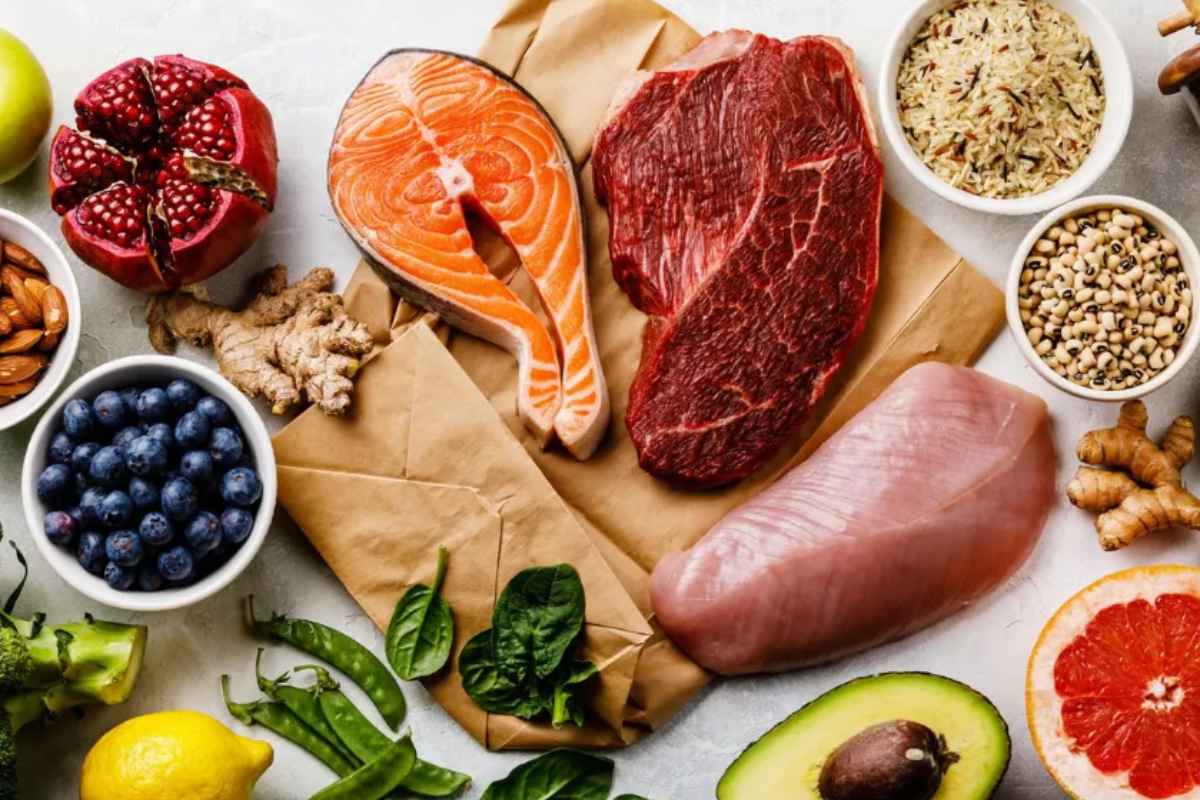
6 Superfoods for Glowing, Radiant Skin
If you want genuinely radiant, healthy skin, don’t start with expensive serums — start with whole foods. Nutrition affects skin structure, repair, inflammation, and hydration. This guide picks six practical, evidence-backed superfoods and shows how to use them in day-to-day meals to support natural skin glow. I also explain why these foods work, what to limit, and give two easy “glow” recipes you can make today.
Why food matters for skin?
Your skin is a living organ that needs building blocks (protein, amino acids), antioxidants to fight free radicals, essential fats to preserve barrier function, and micronutrients (vitamin C, zinc, vitamin D) for collagen synthesis and repair. Foods reach the skin through the bloodstream, so what you eat literally becomes the raw material for healthy skin. Recent dietary studies show dietary vitamin C raises skin vitamin C and supports collagen and skin thickness — i.e., what you eat can change skin structure.
The gut microbiome also communicates with the skin via immune and metabolic pathways: improving gut ecology with probiotics or fiber-rich foods can reduce inflammation and improve some skin conditions. That “gut-skin axis” is an active area of research with growing clinical evidence.
Finally, certain diets — especially high-glycemic diets and excess refined sugars — are associated with worse acne and skin inflammation, so food choices can be protective or provocative.
The 6 Superfoods (what to eat and why)
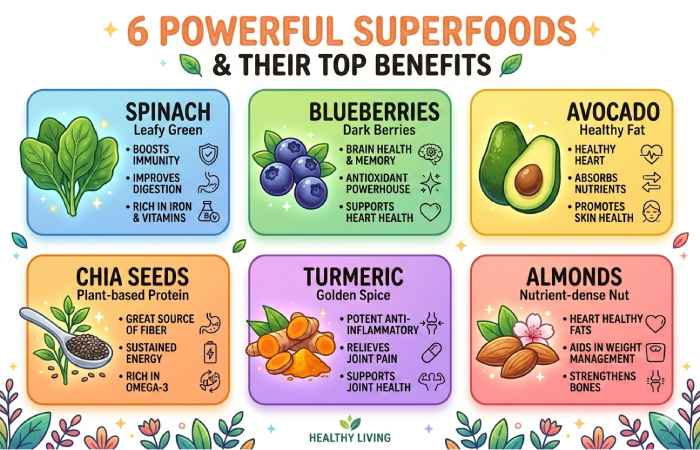 1) Berries (blueberries, strawberries, raspberries) — antioxidant powerhouses
Why they help: Berries are rich in vitamin C and polyphenols that neutralize oxidative damage from sun and pollution and support collagen stability. Regular berry intake supplies both antioxidants and fiber, which supports the gut and reduces systemic inflammation. Studies and clinical guidance repeatedly call out berries as top antioxidant foods for skin health.
How to use them: 1 cup of mixed berries daily (fresh or frozen) — add to morning yogurt, oats, or smoothies.
Nutrition note: Strawberries and kiwi are especially high in vitamin C (helps collagen formation).
2) Fatty fish (salmon, mackerel, sardines) — omega-3 for barrier & calm
Why they help: Omega-3 fats (EPA/DHA) reduce inflammation, strengthen the skin’s lipid barrier, and help skin retain moisture — making skin look plumper and less reactive. Clinical reviews show omega-3s can reduce inflammatory markers and help inflammatory skin conditions when taken orally or used topically as adjuncts.
How to use them: Aim for 2–3 servings of fatty fish per week (about 100–150 g per serving) or consider a third-party-tested fish oil supplement if you don’t eat fish.
Cooking tip: Bake or grill with olive oil and fresh herbs — avoid long high-heat frying which oxidizes fats.
3) Dark leafy greens (spinach, kale, swiss chard) — micronutrient density
Why they help: Leafy greens are concentrated sources of vitamins A, C, K, folate, and antioxidants (lutein, zeaxanthin) that protect skin cells and support repair. Vitamin A precursors help maintain normal epithelial turnover; vitamin C supports collagen synthesis. Greens also provide magnesium and iron which support healthy skin tone.
How to use them: Add a generous handful of spinach or kale to smoothies, salads, or sauté lightly as a warm side.
Serving idea: A daily salad with mixed greens, bell pepper, and seeds covers much of your micronutrient needs.
4) Nuts & seeds (almonds, walnuts, chia, flax) — vitamin E & essential fats
Why they help: Nuts and seeds supply vitamin E (an antioxidant that protects membranes), zinc (wound healing & reduced inflammation), and plant-based omega-3s (ALA) from chia/flax. These nutrients help preserve barrier integrity and reduce oxidative stress. A handful of nuts daily is associated with better skin hydration and fewer inflammatory flare-ups.
How to use them: Snack on a small handful (20–30 g) daily or top yogurt/salads with seeds.
Note: Walnuts provide a good omega-3-to-omega-6 balance among nuts.
5) Vitamin-C foods (citrus, bell peppers, kiwi) — collagen support
Why they help: Vitamin C is essential for collagen production and acts as an antioxidant in skin. Dietary vitamin C increases plasma and skin levels and has been linked to increased skin thickness and improved epidermal function in human studies — i.e., it supports the skin’s structural proteins. (National Institutes of Health)
How to use them: Aim for at least one high-vitamin-C food per day — a bell pepper in a salad, an orange as a snack, or kiwi in a smoothie.
Serving idea: Red bell pepper slices + hummus as a crunchy snack.
6) Probiotic foods (yogurt, kefir, fermented vegetables) — gut-skin balance
Why they help: The gut–skin axis links intestinal microbiome health with skin inflammation, barrier function, and conditions like acne and atopic dermatitis. Oral probiotics and fermented foods can modulate systemic immunity and reduce inflammatory signals that affect the skin. High-quality reviews conclude that probiotic interventions show promise for skin benefits via microbiome modulation.
How to use them: Include fermented yogurt or kefir (unsweetened) 3–4 times a week, or daily if tolerated. Kombucha, sauerkraut, and kimchi offer other probiotic options — watch salt content.
Tip: Choose Greek yogurt or kefir for higher protein; pick low-sugar varieties.
Quick reference table — 6 superfoods at a glance
| Superfood | Key nutrients | Typical serving | Skin benefit |
| Berries | Vitamin C, polyphenols | 1 cup | Antioxidant, collagen support |
| Fatty fish | EPA/DHA omega-3 | 100–150 g, 2–3x/wk | Anti-inflammatory, barrier support |
| Leafy greens | Vitamins A, C, K, folate | 1–2 cups raw | Repair, antioxidant defense |
| Nuts & seeds | Vitamin E, zinc, ALA | 20–30 g | Barrier, hydration, inflammation control |
| Citrus / peppers | Vitamin C | 1 fruit / ½ cup peppers | Collagen synthesis |
| Probiotic foods | Live cultures, protein | ½–1 cup yogurt/kefir | Gut-skin axis modulation |
Hydration & water-rich foods (why this helps)
Water alone won’t erase wrinkles overnight, but dehydration makes skin look dull and emphasizes fine lines. Drinking sufficient fluids and eating water-rich fruits/veg (cucumber, watermelon, celery) support skin cell function and can improve tone — especially if you were previously under-hydrated. Pair internal hydration with good topical moisturizers for best results.
Hydrating snack ideas: cucumber + mint salad, watermelon cubes with lime.
Foods to limit (what may harm your glow)
- High-glycemic / refined sugars and starches — linked to acne and increased inflammation; reducing refined carbs can improve skin over weeks to months.
- Excessive skim milk/possibly some dairy — evidence is mixed; some studies show associations with acne in certain populations. If you suspect dairy triggers breakouts, trial a brief elimination under guidance.
- High-dose untested supplements or harsh “detox” diets — may do more harm than good; always test for deficiencies and consult a clinician.
Two easy glow-boosting recipes
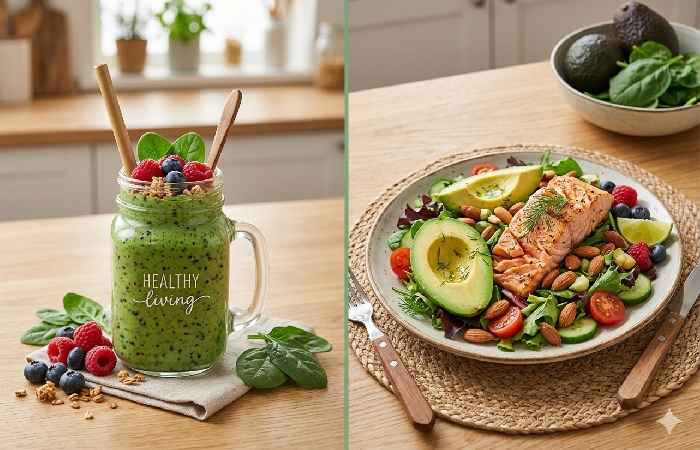 Glow Berry + Greens Smoothie (serves 1) — quick morning boost
- 1 cup spinach (or kale, lightly packed)
- ¾ cup mixed berries (frozen ok)
- ½ cup plain Greek yogurt (or kefir for probiotics)
- 1 small kiwi or ½ orange (vitamin C)
- 1 tbsp ground flaxseed (omega-3 ALA)
- ¾ cup water or unsweetened almond milk
Blend until smooth. Optional: 1 tsp honey if you prefer sweetness.
Why it works: combines vitamin C, antioxidants, probiotics, greens, and healthy fats in one drink — ideal for skin and gut support.
Cucumber-Avocado Salmon Salad (serves 2) — lunch or light dinner
- 150 g cooked salmon (flaked)
- 1 medium avocado, cubed
- 1 cucumber, sliced
- ½ red bell pepper, diced
- 1 cup mixed greens (spinach + arugula)
- Dressing: 1 tbsp olive oil, juice of ½ lemon, salt, pepper, chopped dill
Toss and serve.
Why it works: provides omega-3s, healthy fats, vitamin C, hydration, and leafy greens — a complete skin-supporting meal. (Mayo Clinic)
Practical meal pattern (how to fit these foods into a week)
- Breakfast: Berry smoothie with spinach + Greek yogurt (daily)
- Lunch: Salad with salmon or tuna + avocado (2–3×/week)
- Snacks: Handful of nuts, orange or bell pepper slices, yogurt/kefir (daily)
- Weekly: One deep-colored vegetable (sweet potato, red pepper) + fermented side (kimchi or plain yogurt)
Consistency matters more than perfection — aim to include at least 3 of the six superfoods most days.
Supplements — when they help
Food first. But if lab tests show low iron, vitamin D, or other deficiencies, targeted supplements can speed recovery and improve skin health. Collagen supplements and fish oil show benefits in some trials, but speak with a clinician before starting — especially if pregnant, breastfeeding, or on medications.
Common myths & realistic expectations
- Myth: One “superfood” will fix damaged skin overnight. Reality: improvements come from consistent dietary patterns plus topical care and sun protection.
- Myth: Drinking massive water volumes will erase age lines. Reality: rehydration helps if you’re chronically under-hydrated, but skin aging is multifactorial.
- Myth: All dairy causes acne. Reality: dairy’s role is mixed and likely individualized; high glycemic diets are a stronger, more consistent risk factor for acne.
Small lifestyle habits that amplify food-based results
- Sleep 7–9 hours (skin repair happens during sleep).
- Use daily sunscreen (UV damage undermines dietary gains).
- Reduce smoking/excess alcohol (both accelerate oxidative damage).
- Keep a simple topical routine: cleanser, moisturizer (ceramides/hyaluronic acid), and daily SPF.
FAQs
Q: Which single food helps most for glowing skin?
A: No single food is magic; vitamin-C rich fruits (e.g., kiwi, bell peppers) and antioxidant berries are among the most impactful because they directly support collagen and fight oxidative stress.
Q: How long until I see improvements after changing my diet?
A: Expect subtle changes in skin hydration and tone within 4–8 weeks; structural changes (collagen, thickness) may take 2–3 months or longer depending on the nutrient and baseline status.
Q: Is a probiotic food enough or do I need a supplement?
A: Fermented foods (yogurt, kefir) help most people. Supplements can be useful for targeted conditions but choose evidence-based strains and discuss with a clinician.
Q: Should I avoid all sugar for clear skin?
A: Cutting refined sugars and reducing high-GI foods helps many people, especially with acne. Focus on whole grains, fiber, and balanced meals rather than complete elimination.
Final note & safety
If you suspect a medical cause for skin problems (sudden widespread acne, hair loss, rashes), see a dermatologist and ask for blood tests (iron/ferritin, vitamin D, thyroid). Dietary changes help most people and are safe when balanced — but aggressive supplementing without testing can be harmful.
Eat a colorful plate, prioritize whole foods, and pair nutrition with sunscreen and good topical care — that combination will give you healthier, more radiant skin over time.