

Niacinamide for Oily Skin: Does It Really Control Shine?
Oily skin can feel like a never-ending battle. The midday shine, enlarged pores, makeup breakdown, and frequent breakouts are all common frustrations. If you live in a humid climate or naturally produce excess sebum, you may have tried blotting papers, mattifying primers, clay masks, and even harsh toners — only to find that the shine returns within hours.
Among modern skincare ingredients, niacinamide has become one of the most recommended solutions for oily and acne-prone skin. But does it actually control shine? Or is it just another trending ingredient?
This in-depth guide explores the science behind niacinamide, how it interacts with oily skin, what percentage works best, how to use it correctly, and whether it truly delivers long-term oil control.
What Is Niacinamide?
Niacinamide is a form of Vitamin B3, a water-soluble vitamin essential for cellular function. In skincare, it is known for its versatility. Unlike aggressive oil-stripping ingredients, niacinamide supports the skin barrier while regulating oil production.
It is commonly found in:
- Serums
- Lightweight moisturizers
- Toners
- Sunscreens
- Essence formulations
Its popularity stems from its ability to address multiple concerns simultaneously — oiliness, enlarged pores, uneven tone, inflammation, and weakened barrier function.
Why Oily Skin Produces Excess Shine
Before understanding how niacinamide works, it helps to understand why oily skin behaves the way it does.
Sebum is produced by sebaceous glands. While sebum is essential for protecting and lubricating the skin, excessive production leads to:
- Visible shine
- Clogged pores
- Blackheads and whiteheads
- Acne breakouts
- Enlarged pore appearance
Common triggers for excess oil production include:
- Hormonal fluctuations
- Humidity and heat
- Over-cleansing
- Barrier damage
- Harsh alcohol-based products
- Dehydration
Ironically, stripping the skin too aggressively can worsen oiliness. When the barrier is compromised, the skin compensates by producing even more oil.
This is where niacinamide stands apart.
How Niacinamide Controls Shine
Niacinamide does not “dry out” the skin. Instead, it balances and regulates oil production through several mechanisms.
1. Sebum Regulation
Clinical research has shown that niacinamide can reduce the rate of sebum excretion over time. Consistent use (typically 4–8 weeks) has been associated with noticeable reductions in oiliness.
Rather than blocking oil glands entirely, it moderates their activity.
2. Barrier Strengthening
Niacinamide stimulates ceramide production. Ceramides are lipids that strengthen the skin barrier and prevent moisture loss.
When the barrier is strong:
- Irritation decreases
- Inflammation reduces
- Oil overproduction is minimized
3. Anti-Inflammatory Effects
Oily skin is often acne-prone. Niacinamide has anti-inflammatory properties that calm redness and swelling, reducing the cycle of breakouts that can further stimulate oil production.
4. Pore Refinement
While pores cannot physically shrink, reduced oil accumulation makes them appear smaller and less prominent.
What Percentage of Niacinamide Works Best for Oily Skin?
One of the most common questions is about concentration. Higher percentages do not automatically mean better results.
Below is a research-based guideline:
| Niacinamide Concentration | Ideal For | Oil Control Effect | Irritation Risk |
| 2% | Sensitive beginners | Mild regulation | Very low |
| 4–5% | Most oily skin types | Optimal balance | Low |
| 10% | Persistent oil + marks | Stronger effect | Moderate |
| Above 10% | Advanced users only | No proven added benefit | Higher |
Dermatological evidence suggests that 4–5% is sufficient for most individuals. Concentrations above 10% may increase irritation without significantly improving oil control.
How Long Does Niacinamide Take to Reduce Shine?
Niacinamide is not an instant matte solution. It works progressively.
| Timeline | What to Expect |
| Week 1–2 | Skin feels smoother and less greasy |
| Week 3–4 | Noticeable reduction in midday shine |
| Week 6–8 | Improved pore appearance and fewer breakouts |
| 3 Months | Balanced oil production and stronger barrier |
Consistency is key. Skipping application or using it sporadically may reduce effectiveness.
Niacinamide vs Other Oil-Control Ingredients
To understand its effectiveness, it helps to compare niacinamide with other popular ingredients.
| Ingredient | Primary Function | Immediate Matte Effect | Long-Term Oil Control | Irritation Potential |
| Niacinamide | Sebum regulation + barrier support | Mild | Strong | Low |
| Salicylic Acid | Pore exfoliation | Moderate | Moderate | Medium |
| Clay Masks | Oil absorption | High (temporary) | None | Low |
| Retinol | Cell turnover | Mild | Indirect | Medium |
| Alcohol Toners | Surface oil removal | High (temporary) | None | High |
Niacinamide stands out because it offers long-term oil balance rather than temporary shine suppression.
Ideal Skincare Routine for Oily Skin Using Niacinamide
Morning Routine
- Gentle gel cleanser
- Niacinamide serum (4–5%)
- Lightweight oil-free moisturizer
- Broad-spectrum sunscreen SPF 30+
Night Routine
- Cleanser
- Niacinamide serum
- Barrier-repair moisturizer
Optional additions:
- Salicylic acid (2–3 times weekly)
- Clay mask (once weekly)
Avoid over-layering multiple high-strength actives simultaneously.
Product Price Comparison: Budget to Premium Options
Below is a pricing overview of niacinamide products across different categories. Prices vary by region and retailer.
| Category | Concentration | Typical Price Range | Suitable For |
| Budget Drugstore | 5–10% | $6 – $15 | Beginners |
| Mid-Range Dermatological | 4–5% | $15 – $35 | Daily use |
| Premium Clinical | 5–10% + Zinc/Peptides | $35 – $60 | Advanced routines |
| Korean Essence Format | 2–5% | $15 – $30 | Sensitive oily skin |
Higher cost does not guarantee better oil control. Formulation quality and compatibility matter more than price.
Oil Control Distribution: What Actually Reduces Shine?
Based on dermatological observations, effective shine control usually comes from multiple factors:
Text-Based Pie Representation of Oil Control Contributors:
- 40% Barrier Repair
- 30% Sebum Regulation
- 15% Anti-Inflammatory Support
- 10% Proper Hydration
- 5% Environmental Protection (SPF)
Niacinamide directly impacts the top three contributors, which explains its strong reputation for managing oily skin.
Common Mistakes When Using Niacinamide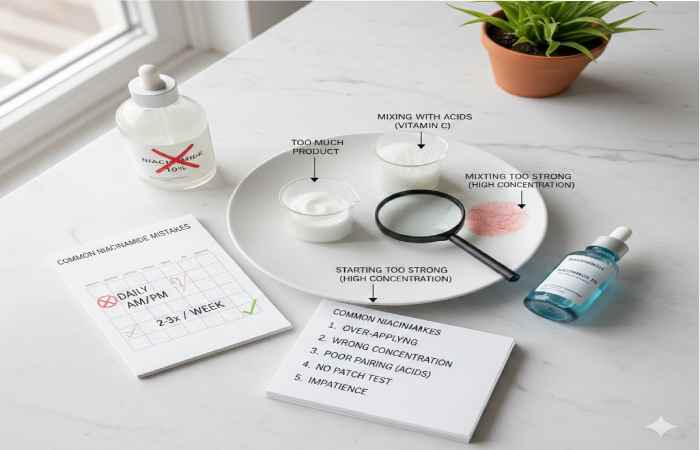
Even effective ingredients fail when used incorrectly.
- Skipping Moisturizer
Oily skin still needs hydration. Without it, the skin may compensate by producing more oil.
- Using Excessively High Concentrations
More is not better. Irritation can worsen oiliness.
- Over-Exfoliating
Combining niacinamide with daily acids can compromise the barrier.
- Expecting Overnight Results
Niacinamide works gradually.
- Layering Incorrectly
Apply after cleansing and before heavier creams.
Can Niacinamide Make Oily Skin Worse?
In rare cases, individuals report increased shine. Usually, this is due to:
- Heavy serum formulation
- Added silicones
- Poor product layering
- Skin purging from another active ingredient
Niacinamide itself is unlikely to worsen oil production when used in appropriate concentration.
Is Niacinamide Suitable for Acne-Prone Oily Skin?
Yes. Its anti-inflammatory properties make it especially helpful for:
- Hormonal acne
- Inflammatory papules
- Post-acne marks
- Redness
It also pairs well with zinc, which can enhance oil-regulating effects.
Who Should Avoid Niacinamide?
Niacinamide is generally safe for all skin types, including sensitive and rosacea-prone skin. However:
- Those with extremely reactive skin should start at 2%
- Individuals using strong prescription treatments should consult a dermatologist
- Patch testing is recommended before full application
Does Niacinamide Replace Mattifying Products?
No. It complements them.
Mattifying primers and powders provide immediate surface control. Niacinamide improves internal oil balance over time.
Using both can provide short-term and long-term benefits.
Expert Take: Why Dermatologists Recommend Niacinamide
Dermatologists favor niacinamide because it:
- Has strong clinical backing
- Is well tolerated
- Supports multiple skin functions
- Works for both oily and combination skin
- Can be used twice daily
- Does not increase sun sensitivity
Unlike aggressive oil-reducing treatments, it does not compromise the barrier.
Frequently Asked Questions
Can I use niacinamide every day?
Yes. It is safe for daily morning and night use.
Can I combine it with salicylic acid?
Yes. Apply niacinamide after exfoliation for calming support.
Will it permanently stop oil production?
No. It regulates oil while in use. Discontinuation may return skin to baseline levels.
Is 10% too strong?
For some individuals, yes. Start with 4–5%.
Does it help with enlarged pores?
It improves their appearance by reducing congestion.
Final Verdict: Does Niacinamide Really Control Shine?
Yes — when used consistently and correctly.
Niacinamide does not provide an instant matte finish like blotting sheets or alcohol toners. Instead, it addresses the root causes of oily skin:
- Overactive sebaceous glands
- Weak skin barrier
- Inflammation
- Dehydration-triggered oil production
By regulating sebum output, strengthening the barrier, and calming inflammation, niacinamide delivers long-term oil balance rather than temporary shine suppression.
For most oily skin types, a 4–5% niacinamide serum used twice daily can significantly reduce excess shine within 4–8 weeks.
If you are looking for a science-backed ingredient that balances oily skin without stripping it, niacinamide remains one of the most reliable and dermatologist-approved options available today.