

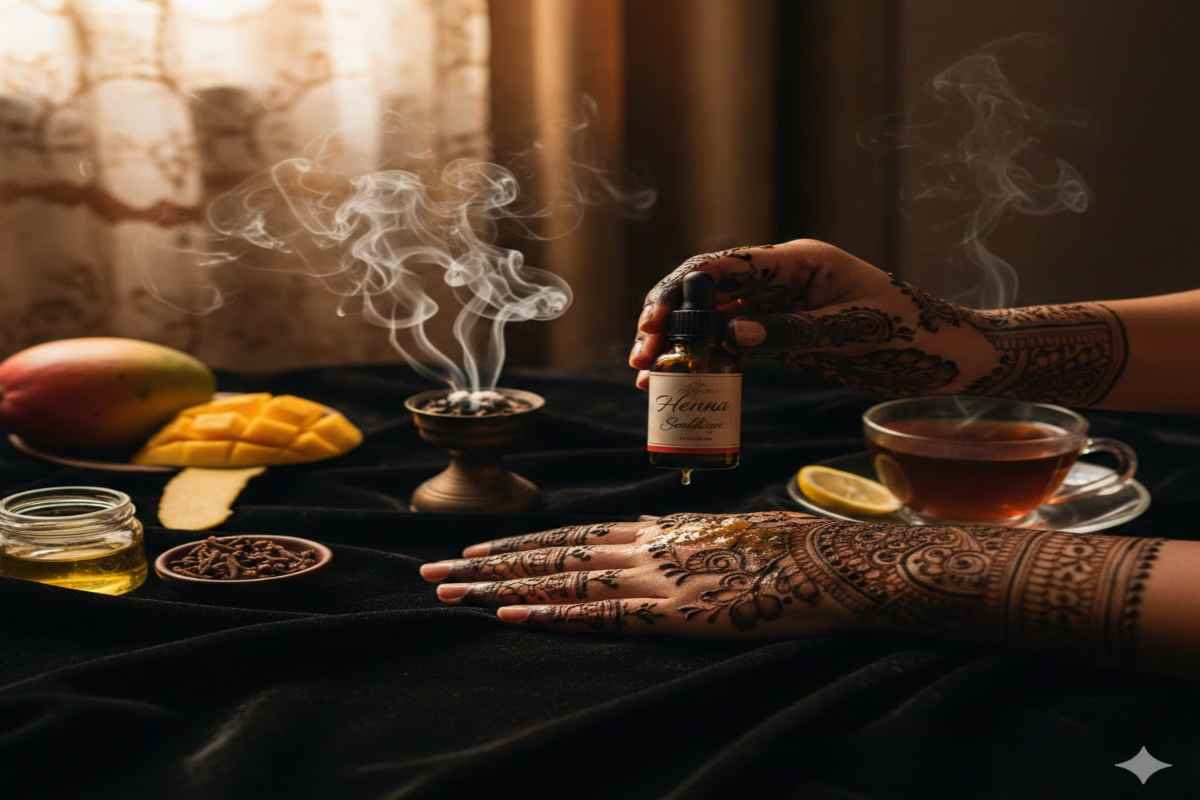
How to Make Henna Darker: 7 Proven Tricks for Bridal-Ready Stain
Meet the people behind this publication


How to Make Henna Darker – Henna has been an essential part of bridal beauty rituals for centuries. From intricate wedding designs to festive celebrations, a deep, rich henna stain symbolizes joy, love, and prosperity. However, achieving that dark, bridal-ready stain is not just about applying henna and waiting. It requires the right ingredients, proper preparation, and careful aftercare.
If you’ve ever wondered why some henna turns deep maroon while others fade into a light orange, this comprehensive guide will walk you through the science, techniques, and expert-backed tricks to help you get the darkest possible henna stain.
This article belongs in Mehndi & HennaUnderstanding Why Henna Stains Darker
Before diving into the tricks, it’s important to understand how henna works.
Henna comes from the powdered leaves of the Lawsonia inermis plant. The active dye molecule in henna is called lawsone. This molecule binds with keratin, the protein found in your skin. When properly released and absorbed, it creates a stain that gradually darkens over 24–48 hours.
Several factors influence how dark your henna becomes:
- Quality and freshness of henna powder
- Proper dye release during mixing
- Skin type and thickness
- Duration of application
- Heat exposure
- Aftercare routine
The palms and soles usually stain darker because the skin is thicker and contains more keratin. This is why bridal mehendi on hands often appears richer than on arms or back.
For design ideas, see our full-hand mehndi guide.
7 Proven Tricks to Make Henna Darker
1. Use Fresh, High-Quality Henna Powder
The foundation of a dark stain is quality henna. Fresh henna powder contains a higher concentration of lawsone, which leads to better dye release and deeper color.
How to Identify Good Henna Powder
- Fine, triple-sifted texture
- Natural green color (not brown or dull)
- Fresh, earthy smell
- Stored in airtight packaging
Comparison Table: Types of Henna
| Henna Type | Dye Strength | Expected Stain Depth | Safety Level |
| Fresh organic henna | Very High | Deep maroon/brown | Very Safe |
| Regular store-bought henna | Moderate | Medium brown | Safe |
| Old/stale henna | Low | Light orange | Safe |
| Chemical “black henna” | Artificial | Instant black | Unsafe |
Avoid black henna products that promise instant dark results. These often contain chemicals like PPD that can cause allergic reactions and skin damage. 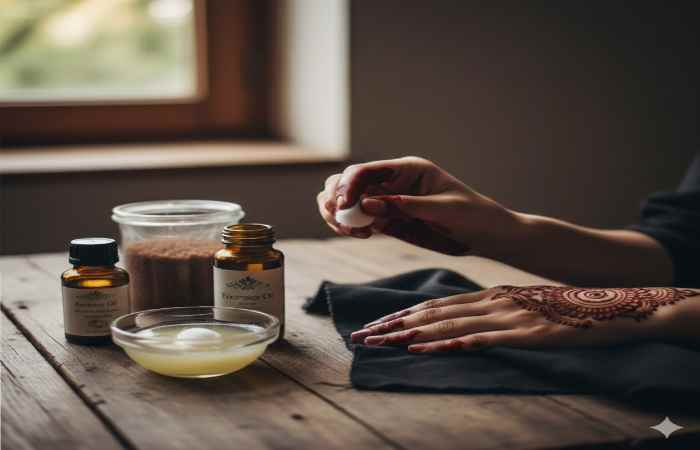
2. Mix Henna with the Right Liquids
The mixing process plays a crucial role in dye release.
Why Acidity Matters
Henna releases dye more effectively in a mildly acidic environment. Lemon juice is commonly used because it helps break down the henna plant cells, allowing the dye to release properly.
Basic Bridal Henna Mix Recipe
- 100 grams fresh henna powder
- 60–80 ml lemon juice
- Warm water (as needed for smooth consistency)
- 8–10 drops eucalyptus or tea tree essential oil
Steps:
- Sift henna powder to remove lumps.
- Add lemon juice gradually and mix.
- Add essential oil.
- Adjust consistency with warm water.
- Cover and let it rest for 8–12 hours at room temperature.
Allowing the paste to rest is critical. Immediate use reduces dye release and results in lighter stains.
3. Apply Lemon and Sugar Sealant
One of the most recommended bridal tricks is the lemon-sugar sealant.
Why It Works
- Sugar keeps the paste moist.
- Lemon adds mild acidity.
- Moist paste stays in contact with skin longer.
Sealant Formula
- 1 tablespoon lemon juice
- 2 tablespoons sugar
Mix until dissolved and lightly dab over dried henna using cotton. Do not soak the design. The goal is to prevent cracking and flaking.
4. Keep the Henna Warm
Heat significantly enhances henna staining.
When the skin is warm, pores open slightly, allowing better dye absorption. Brides traditionally sit near gentle warmth or use natural methods to enhance heat exposure.
Popular Heat Methods
- Clove steam (brief and careful exposure)
- Sitting in a warm room
- Wrapping hands lightly to retain body heat
Avoid excessive heat, as it can cause sweating and smudging.
5. Leave Henna on for Longer Hours
The longer henna stays on the skin, the darker the stain.
Recommended Time Duration
| Duration | Expected Result |
| 2–3 hours | Light orange |
| 4–6 hours | Medium brown |
| 6–8 hours | Dark brown |
| Overnight | Deep maroon/brown |
For bridal mehendi, keeping it overnight (8–10 hours) produces optimal results.
Scrape off the dried paste gently instead of washing it.
6. Avoid Water for 24 Hours
After removing the dried henna, the stain appears bright orange. Over the next 24–48 hours, it oxidizes and darkens naturally.
Water interrupts this oxidation process.
Post-Removal Care
- Do not wash hands for at least 12–24 hours.
- Avoid soap or detergent.
- Apply natural oils instead.
This simple step can significantly deepen the final color.
7. Moisturize with Natural Oils
After scraping off the paste, apply oil to seal and protect the stain.
Best Oils for Darkening Henna
- Coconut oil
- Mustard oil
- Almond oil
- Olive oil
Oil acts as a barrier against water and slows fading.
What Actually Makes Henna Darker? A Visual Breakdown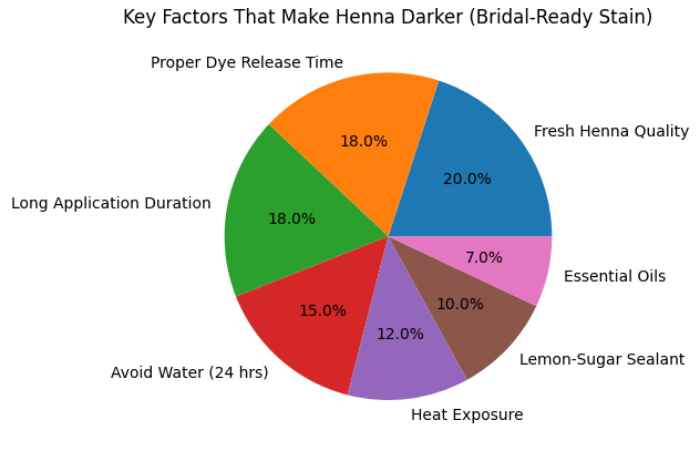
Scientific Insight: What Actually Makes Henna Darker?
Based on research and traditional practices, the following factors contribute most to a darker stain:
| Factor | Impact Level |
| Fresh henna powder | Very High |
| Proper dye release time | Very High |
| Long application duration | Very High |
| Heat exposure | High |
| Lemon-sugar sealant | Moderate |
| Avoiding water post-removal | Very High |
| Essential oils | Moderate |
The most effective strategy is combining multiple methods rather than relying on one single trick.
For bridal stain aftercare, read how to darken mehndi.
Common Myths About Dark Henna
Myth 1: Adding Coffee Makes Henna Darker
Coffee may slightly change tone but does not significantly increase stain depth.
Myth 2: Black Henna Is Better
Black henna often contains harmful chemicals and should be avoided.
Myth 3: Washing Hands Darkens Color
Water actually prevents proper oxidation.
Myth 4: More Essential Oil Equals Darker Stain
Only specific oils with monoterpenes help. Excess oil can ruin paste consistency.
Myth 5: Scrubbing Before Application Helps
Gentle exfoliation is beneficial, but harsh scrubbing irritates skin and reduces stain quality.
Ideal Bridal Henna Preparation Timeline
For brides, timing is everything.
| Timeline Before Wedding | Action Step |
| 3 days before | Apply henna |
| Immediately after | Seal and keep warm |
| First 24 hours | Avoid water |
| 48 hours | Peak color achieved |
Applying henna 2–3 days before the wedding ensures the stain reaches its deepest shade on the big day.
Additional Expert Tips for Maximum Stain
- Wash hands thoroughly before application to remove oils.
- Do not apply lotion before henna.
- Choose designs with denser patterns for richer appearance.
- Avoid shaving or waxing immediately before application.
- Protect hands while washing dishes for several days.
Price Comparison: Professional vs DIY Henna
| Option | Average Cost (India) | Pros | Cons |
| Professional Bridal Mehendi | ₹3,000–₹15,000 | Expert application, intricate designs | Expensive |
| Home-based Henna Artist | ₹1,000–₹4,000 | Affordable, customizable | Skill varies |
| DIY Henna Application | ₹200–₹600 | Budget-friendly | Requires practice |
While professionals ensure intricate detailing, achieving a dark stain depends more on preparation and aftercare than cost alone.
Why Some Brides Get Darker Henna Than Others
Several natural factors influence stain depth:
- Body temperature
- Hormonal balance
- Skin type
- Blood circulation
- Placement area (palms vs arms)
This is why even with identical techniques, results may vary slightly from person to person.
Final Thoughts
Achieving a dark, bridal-ready henna stain is not about shortcuts or chemical products. It’s about understanding the process, respecting traditional methods, and following the right preparation steps.
To summarize:
- Use fresh, high-quality henna.
- Allow proper dye release time.
- Apply lemon-sugar sealant.
- Keep the paste warm and on the skin longer.
- Avoid water for at least 24 hours.
- Moisturize with natural oils.
When done correctly, henna will naturally deepen into a rich, beautiful maroon shade within 48 hours.
Bridal henna is a blend of art, patience, and care. With these proven tricks, you can confidently achieve the dark stain that enhances your special occasion and leaves a lasting impression.